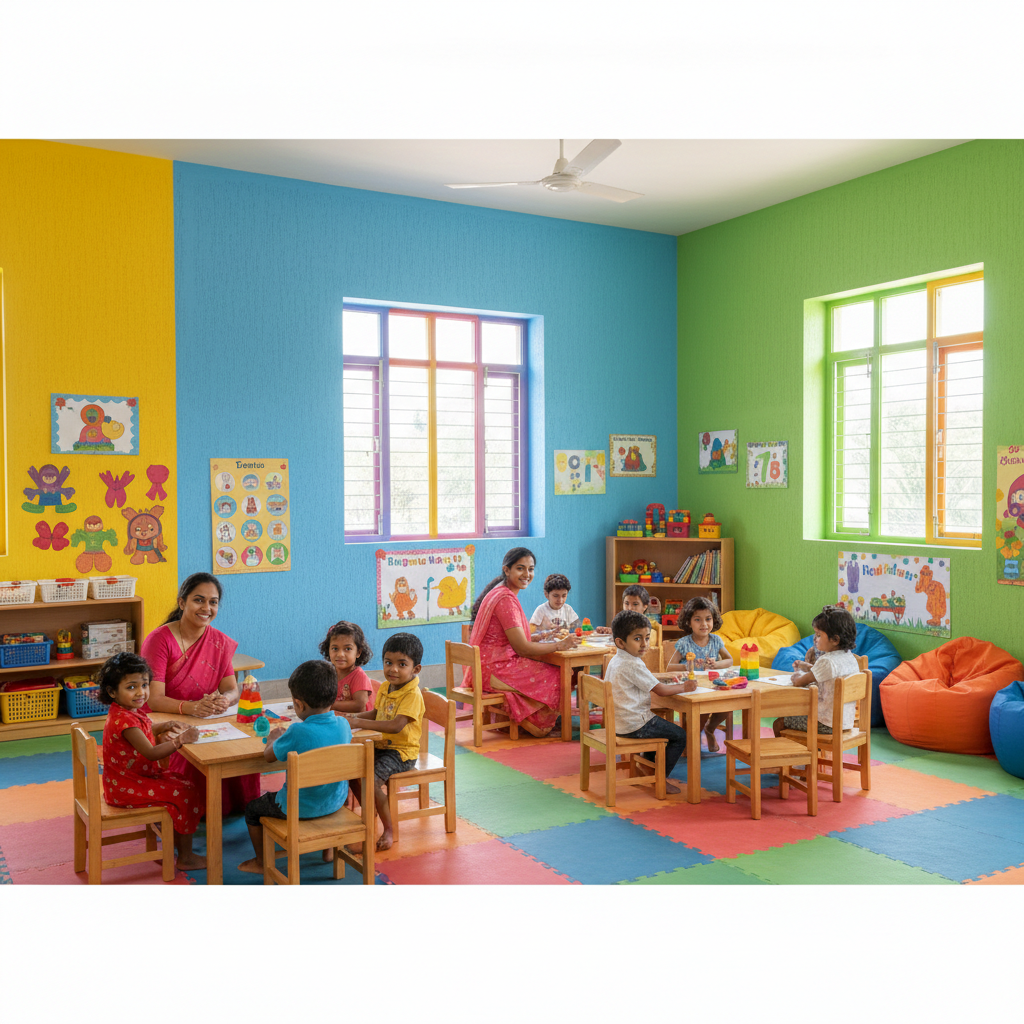
Early childhood is one of the most important stages in a child’s life. The experiences, environment, and guidance a child receives between the ages of two and six play a major role in shaping their personality, confidence, and academic success. This is why choosing the right play school is not just a decision — it is an investment in your child’s future.
At this stage, children are naturally curious. They observe everything, ask endless questions, and learn quickly through interaction and play. A well-structured early childhood education program helps channel this curiosity into meaningful learning experiences.
Research shows that nearly 80% of brain development happens before the age of six. During these early years, children develop essential skills such as communication, problem-solving, emotional control, and social interaction. A nurturing play school environment encourages children to explore, think independently, and express themselves freely.
When children are exposed to structured activities like storytelling, rhymes, art, music, and group play, they begin to build strong cognitive and language skills. These early foundations make it easier for them to adapt when they enter primary school.
Many parents worry that play school is “just playing.” However, modern early education focuses on “learning through play.” Play-based learning is scientifically proven to be one of the most effective teaching methods for young children.
Through guided play activities, children learn:
For example, when children participate in group activities, they naturally develop teamwork and social bonding. When they engage in creative art sessions, they strengthen fine motor skills and imagination. When they listen to stories, they improve vocabulary and listening abilities.
One of the biggest advantages of enrolling your child in a quality play school is social development. At home, children are mostly surrounded by family members. In school, they interact with children of similar age groups. This teaches them how to make friends, express emotions, and manage small conflicts.
A caring school environment helps children:
These skills are extremely important for long-term success, not just academically but in life.
Early childhood education acts as a bridge between home and primary school. Children who attend structured programs such as Play Group, Nursery, LKG, and UKG are generally more prepared for formal schooling.
They become familiar with:
This early exposure reduces fear and anxiety when they move to higher classes.
A good play school provides a safe, hygienic, and child-friendly environment. Safety gives parents peace of mind, and comfort helps children learn better. Clean classrooms, secure premises, and attentive teachers create a space where children feel happy and protected.
When children feel safe, they participate more actively and express themselves confidently.
Teachers play a vital role in early childhood education. A patient, caring, and trained teacher understands how to guide young minds with love and discipline. Instead of forcing children to learn, skilled educators encourage curiosity and support each child’s unique learning pace.
Children at this age need emotional warmth along with academic guidance. A teacher who understands child psychology can positively influence a child’s growth and confidence.
Strong communication skills are developed in early childhood. Activities like storytelling, rhymes, show-and-tell sessions, and interactive discussions improve speaking and listening abilities.
Children who develop good communication skills early:
These skills benefit them throughout their academic journey.
Creativity is not just about drawing or coloring. It is about thinking differently, solving problems, and expressing ideas. Early childhood programs that include music, art, craft, dance, and role-play activities help children explore their imagination.
Creative children often grow into confident and innovative adults.
Some parents think formal learning can wait. However, structured early education does not mean pressure. It means guided growth in a joyful environment. Starting early helps children develop a routine and love for learning.
The earlier children are introduced to structured social and learning environments, the smoother their academic journey becomes.
When selecting a play school for your child, parents should consider:
The right play school focuses not only on academics but also on emotional, social, and physical growth.
Early childhood education is the stepping stone for lifelong learning. The right environment during the foundation years helps children become confident, creative, and independent individuals.
Investing in quality early education ensures that your child is not just prepared for school but prepared for life. By choosing a nurturing and structured learning environment, parents give their children the best possible start toward a bright and successful future.